

How to Sync Notion Pages to Webflow CMS Without Manual Copying

Tired of copying and pasting blog posts from Notion into Webflow CMS? There’s a faster, cleaner, and more reliable way to sync Notion pages to Webflow—without breaking your layout, losing images, or reformatting code blocks.
In this guide, you’ll learn how to automate your workflow with SyncFlow, a Notion–Webflow integration built to keep your content in lockstep across platforms. We’ll cover setup, field mapping, auto-publish, and smart styling—so your team can write in Notion and publish in Webflow, automatically.

Why sync Notion to Webflow CMS?
- Eliminate manual copying: No more duplicated effort or formatting nightmares.
- Publish faster: Auto-sync and auto-publish move updates straight from Notion to your Webflow collection.
- Maintain consistency: Map titles, rich text, images, slugs, tags, and more with precision.
- Scale content ops: Draft in Notion, approve, then automatically ship to Webflow—repeat.
What is SyncFlow? SyncFlow is a Webflow app that connects a Notion database to a Webflow CMS collection. It supports auto-sync, auto-publish, versatile field types (text, images, checkboxes, dates, URLs), code highlighting, TeX rendering, and even automatic page linking. It also lets you import Notion elements with inline styles or with CSS classes for full design control.
Get started now: https://syncflow.ybouane.com/
Step-by-step: How to sync Notion pages to Webflow CMS Follow these steps to set up a clean, reliable Notion–Webflow integration in minutes.
1) Visit the site and connect accounts
- Go to https://syncflow.ybouane.com/ and click Get Started.
- Approve access to your Webflow sites when prompted.
- Create your SyncFlow account or log in.
2) Launch the app in Webflow
- Open your project in Webflow Designer.
- Launch the SyncFlow app from within Webflow to connect your site.
3) Connect your Notion workspace
- In the SyncFlow app, click Connect Notion.
- Choose the specific Notion page or folder to sync.
4) Create a new sync task
- Click Sync a new database in SyncFlow.
- Select the Webflow CMS collection you want to populate (e.g., Blog Posts).
5) Select or create your Notion database
- Pick an existing Notion database—or let SyncFlow create one with the correct fields for you.
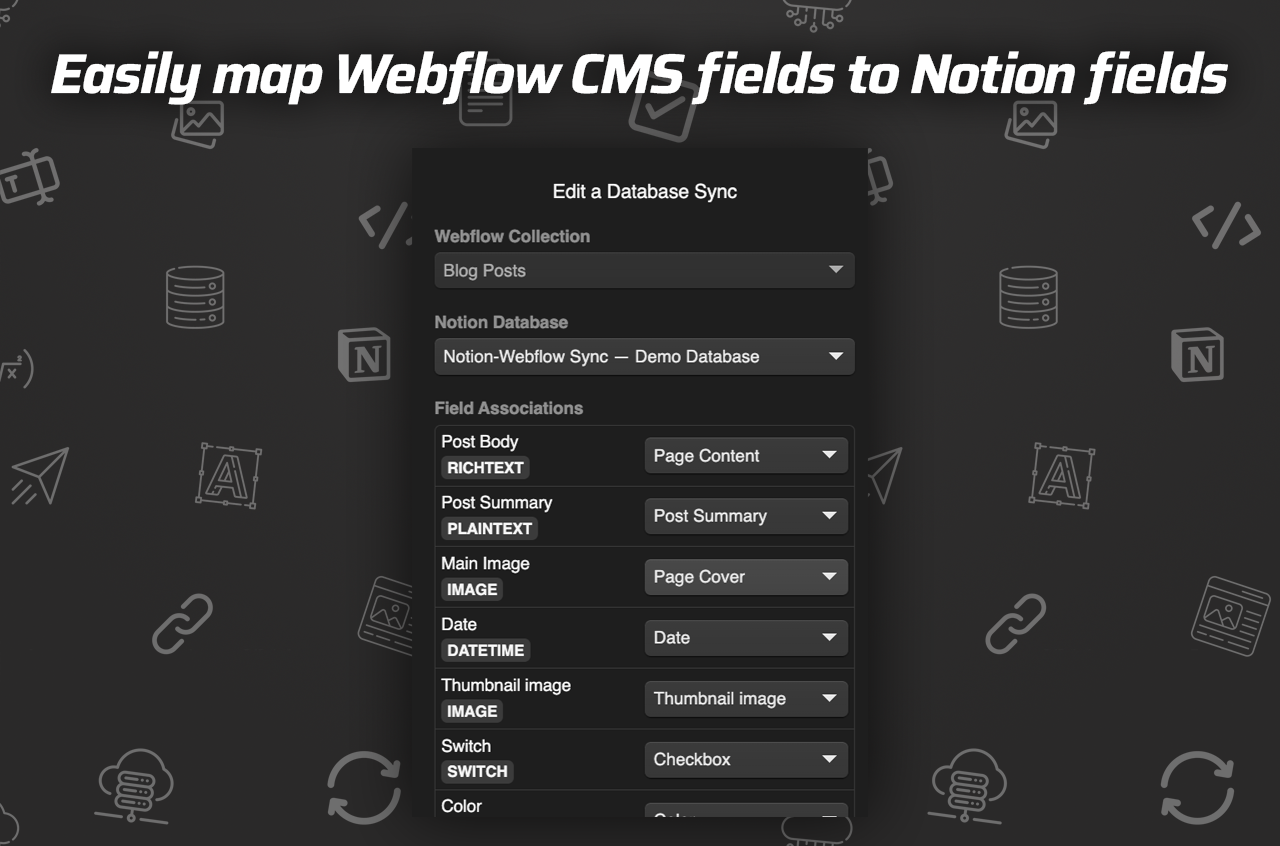
6) Map Notion fields to Webflow collection fields
- Map Title → Name
- Rich Text → Body/Rich Text
- Cover or Image → Main Image
- Multi-select → Tags/Categories
- Date → Publish Date
- URL, Checkbox, Number, etc. → Matching CMS fields
7) Choose styling options
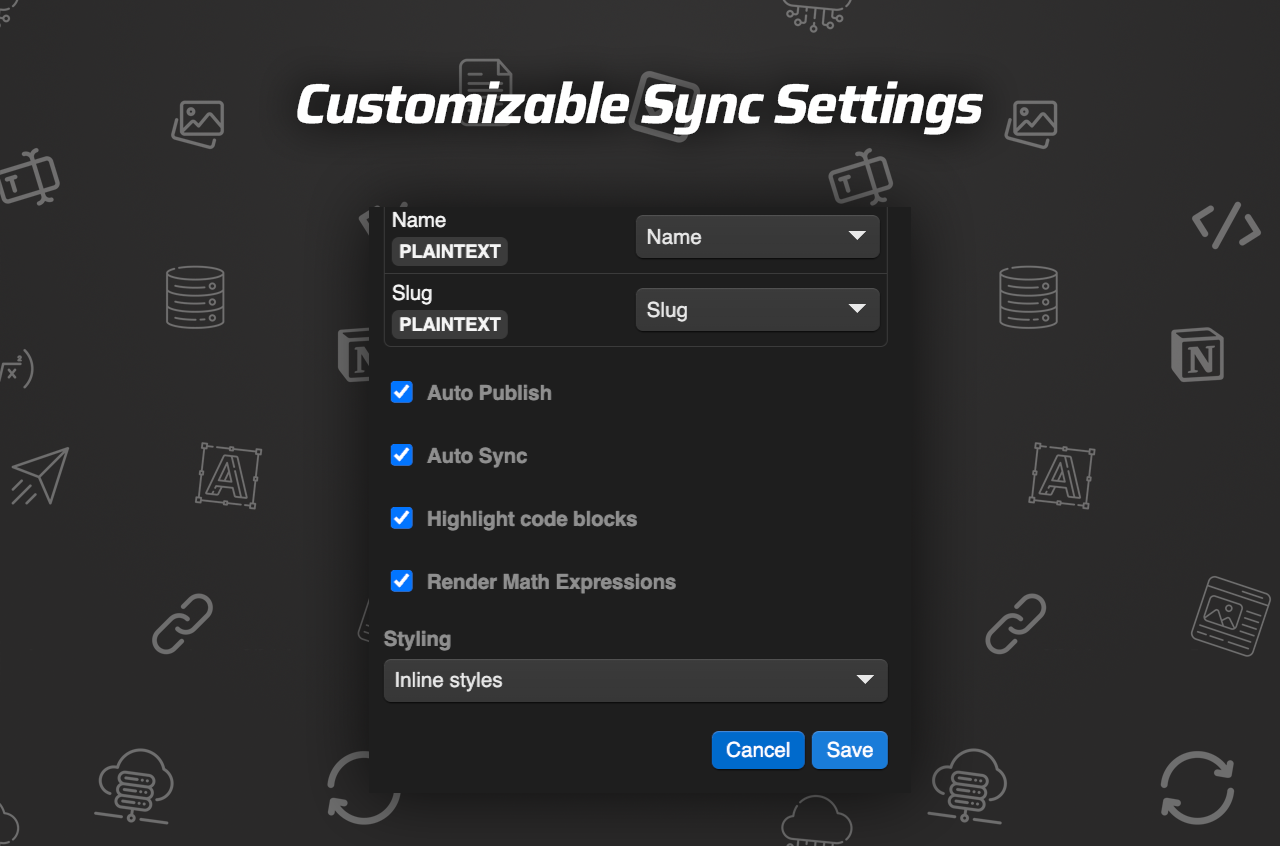
- Inline Styles: Preserve Notion’s inline formatting.
- Use Classes: Import semantic blocks and style them in Webflow for pixel-perfect control.
8) Enable smart features
- Auto-Sync: Push updates whenever Notion pages change.
- Auto-Publish: Update your live Webflow site automatically.
- Page Linking: Convert Notion page mentions into valid internal links between Webflow posts.
- Code Highlighting: Preserve and highlight code blocks.
- TeX Support: Render math expressions nicely on your site.
9) Save and verify
- Click Save in SyncFlow.
- Add a test entry in Notion and watch it appear in your Webflow CMS after a short delay.
10) Review in Webflow
- Open the CMS Collection in Webflow.
- Confirm your fields, images, slugs, and relationships are correct.
11) Design your templates once
- Use Webflow Designer to style the CMS Collection Template.
- Your synced content will populate the design automatically, post after post.
12) Ship content at scale
- Draft, review, and approve in Notion.
- Let SyncFlow keep your Webflow CMS up to date—no manual copying required.
Prefer watching a demo?
- Watch the full tutorial (7 min): https://www.youtube.com/watch?v=_890vYoe3KQ
Best practices for a clean Notion → Webflow workflow
- Standardize slugs in Notion: Add a Slug property and map it to your CMS slug field for SEO-friendly URLs.
- Use descriptive alt text: Include an Alt Text property in Notion for each image and map it to improve accessibility and rankings.
- Separate summary/excerpt fields: Map a Short Description property to Webflow’s summary field for clean collection lists and Open Graph descriptions.
- Leverage tags and categories: Use multi-select properties in Notion to power filters, related posts, and topic hubs on your site.
- Keep a status property: Draft → In Review → Ready to Publish. Combine with Auto-Publish and schedules in Webflow for editorial control.
- Prefer Classes over Inline when scaling: Classes give you consistent styling in Webflow as content volume grows.
Advanced features you’ll love
- Auto-Sync + Auto-Publish: Set it and forget it—edits in Notion ripple to Webflow automatically.
- Page linking: Internal Notion references transform into cross-linked Webflow posts, boosting UX and SEO.
- Code highlighting: Developer docs and tutorials stay readable with correct syntax highlighting.
- TeX support: Academic and technical teams can write equations in Notion and render them beautifully on the site.
Pricing that makes sense
- Standard plan: $8/month
- Unlimited syncs, unlimited databases, unlimited connected fields
- One Webflow site install per plan
- Start here: https://syncflow.ybouane.com/
Troubleshooting quick wins
- Something didn’t sync? Click Full Resync to align your existing Webflow collection with the Notion database.
- Field mismatch? Double-check your field types and names in both Notion and Webflow, then re-map in SyncFlow.
- Images missing? Ensure the Notion image property is mapped to an Image field in Webflow, not Rich Text.
- Formatting oddities? Switch from Inline Styles to Use Classes and re-style the blocks in Webflow for precision.
Why teams switch to SyncFlow
- Content velocity: Writers stay in Notion; designers perfect components in Webflow; SyncFlow binds it all together.
- Fewer errors: No manual copying means fewer broken links, lost images, or missing embeds.
- Better SEO hygiene: Structured fields (slug, meta, alt text) ensure every post ships with best-practice metadata.
Take the next step
- Try SyncFlow today: https://syncflow.ybouane.com/
- Map your first database in minutes and auto-publish your next post—without ever touching copy/paste.
—
Some images in this article were generated via AI tools and the article itself was proof-read with AI.


